It is one of the most honest questions a believing heart can ask, and it deserves an honest answer. What of the soul in the deep hinterland who lived and died without ever hearing the name of Jesus? The devout Muslim, Hindu, or Buddhist, born into another world? The sincere atheist? The infant who dies, the man who never had the mind to understand, the millions who lived before Christ was ever born? Scripture does not hand us a file on each one — but it gives us firm principles, and they point the same direction every time. Let us lay them out plainly, and mark clearly where certainty ends and trust begins.
The anchor: the Judge will do right
Before any detail, settle this, because everything rests on it. The One who decides every case is perfectly just and perfectly merciful — the same God who gave His own Son to save. Abraham’s question is its own answer:
— Genesis 18:25
Whatever the answer turns out to be for any person, it will be right — no one condemned on a technicality, no sincere seeker lost by an accident of geography. If you cannot see the mechanism, you can still trust the Judge.
No one is wholly in the dark
Scripture insists that every person has some light, even with no Bible and no missionary. Creation itself testifies: “The heavens declare the glory of God… there is no speech nor language, where their voice is not heard” (Psalm 19:1–3). Paul presses it hard: “that which may be known of God is manifest in them… the invisible things of him from the creation of the world are clearly seen… so that they are without excuse” (Romans 1:19–20). And there is conscience — people with no written law “shew the work of the law written in their hearts, their conscience also bearing witness” (Romans 2:14–15). The hinterland is not a sealed vault; God has “left not himself without witness” (Acts 14:17).
Judged by the light received, not the light withheld
This is the hinge, and it comes from Jesus’ own mouth. The servant who “knew his lord’s will” and disobeyed is “beaten with many stripes”; the one who “knew not” is “beaten with few” — “unto whomsoever much is given, of him shall be much required” (Luke 12:47–48). Of Tyre, Sidon, and Sodom He said they “would have repented” had they seen what others saw, so “it shall be more tolerable” for them (Matthew 11:21–24). God calibrates accountability to opportunity. A man is never judged as if he had what he did not.
So when someone says, “they can’t be judged on what they never heard” — that is completely true. No one is charged with rejecting a Christ he never met: “If I had not come and spoken unto them, they had not had sin” (John 15:22). But watch the word never carefully: no one is judged only on what they lacked — everyone is judged on what they had. And measured against even that lesser light — his own conscience, the right he himself believed in — every person has fallen short: “thou that judgest doest the same things” (Romans 2:1). “Never heard” does not equal innocent; it means a lower, fairer standard — under which all still need mercy.
God runs toward the seeker
Here is where the hope floods in. The same God who judges justly actively seeks the one who reaches for Him. Cornelius was a devout man feeling after God with the little light he had, before he heard the gospel — and God sent Peter across the country to reach him, declaring:
— Acts 10:35
The promise runs through all of Scripture: “ye shall seek me, and find me, when ye shall search for me with all your heart” (Jeremiah 29:13); God set men in their places “that they should seek the Lord, if haply they might feel after him, and find him” (Acts 17:27); “he is a rewarder of them that diligently seek him” (Hebrews 11:6). Where a heart genuinely wants God, God takes responsibility to get the truth to it — by a missionary, a providence, even a dream.
And He has done it before, for exactly the kind of outsider we wonder about — and written them into the family line of the Messiah Himself:
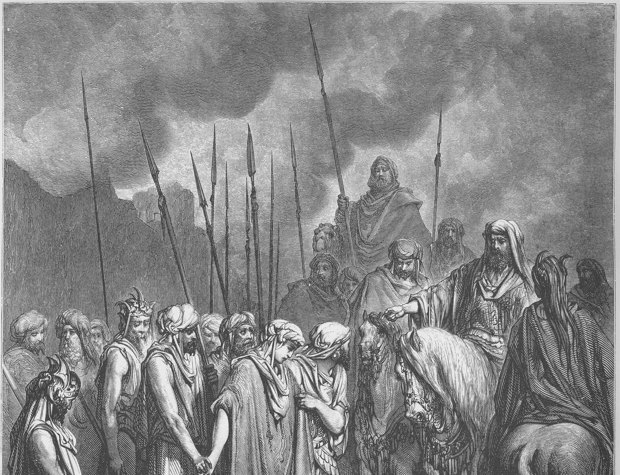
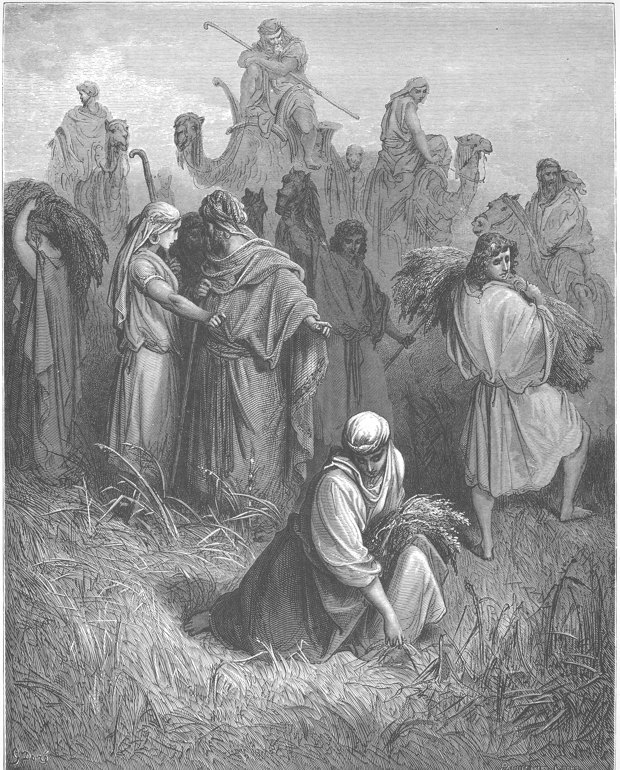
A harlot from a condemned city and a foreigner from an enemy nation — both reached for the true God through the sliver of light they had, and both were not only received but grafted into the very bloodline of the Savior. That is how God treats the outsider who seeks Him.
But aren’t they better off never knowing?
Some argue that since knowledge raises accountability, a person is safer left ignorant — and there is a real kernel there: Jesus did say that His coming increased guilt (John 15:22; 9:41). But the conclusion is backwards, because it smuggles in a false premise — that the unevangelized are innocent by default. They are not; all have sinned against the light they had (Romans 3:23), and “fewer stripes” is still condemnation, not salvation. The gospel is not mainly a raising of the bar — it is the throwing of a rope: “the power of God unto salvation” (Romans 1:16). To withhold it “to protect” someone is to deny a drowning man the rope lest he fail to grab it. And the clincher: if people were truly better off not knowing, the Great Commission would be the cruelest command ever given — yet Christ said, “preach the gospel to every creature” (Mark 16:15). Ignorance cannot give life; only the new birth does.
The sincere adherent of another faith
And the devout Muslim, Hindu, or Buddhist — sincere, moral, reaching for the transcendent through the only path they were ever given? Two things held together, neither let go. First, the truth we do not soften: salvation is through Christ alone — “neither is there salvation in any other” (Acts 4:12); “no man cometh unto the Father, but by me” (John 14:6). Sincerity is not the same as truth; a person can be sincerely, devoutly mistaken. Second, the charity we do not abandon: these are often genuine seekers in the dark, and God judges each by the access and understanding they truly had, which only He fully sees. Paul’s model at Athens is the pattern — not contempt, but revelation: he pointed to their altar “TO THE UNKNOWN GOD” and said, “Whom therefore ye ignorantly worship, him declare I unto you” (Acts 17:23). The God they are feeling after in the dark has a name and a face. And He reaches in: it is widely reported that multitudes across closed nations have come to Christ through dreams and visions — the Cornelius pattern, God breaking in where no messenger could go.
The atheist
The atheist is the sharpest case, because here the issue is the premise itself. But do not flatten them: there is the honest doubter who would believe if shown (Thomas said as much, and Jesus answered him by showing His hands — John 20:27); the wounded, whose unbelief is a protest against a tragedy or a hypocrite; and the settled and defiant. Scripture’s diagnosis is that unbelief’s deepest root is not lack of evidence but suppression of it — men who “hold the truth in unrighteousness” (Romans 1:18) — and yet that is a description of the human heart’s root, not a license to call any particular person a liar, for many are honestly mistaken or were shown a false god they rightly rejected. The hope has famous names on it: the most reluctant convert, and Saul the violent persecutor, met on the road — “it is hard for thee to kick against the pricks” (Acts 26:14). God pursues His enemies, not only His seekers: “when we were enemies, we were reconciled to God” (Romans 5:10). And the atheist who lives by justice and love is leaning on a moral reality that fits a personal God far better than atoms — nearer to Him than his creed admits.
The ones who cannot yet understand
Infants and young children who die, and those who never gain the mind to grasp guilt or the gospel — here Scripture leans tenderly toward mercy. David, when his baby died: “I shall go to him, but he shall not return to me” (2 Samuel 12:23). Jesus: “of such is the kingdom of heaven” (Matthew 19:14); “it is not the will of your Father… that one of these little ones should perish” (Matthew 18:14). A soul that cannot comprehend a choice is not condemned for failing to make it — “children, which… had no knowledge between good and evil” (Deuteronomy 1:39). Much given, much required; little given, little required. We trust them, with real peace, to a God who is never unjust.
Those who lived before Christ
And the countless millions before Bethlehem? They prove the principle that answers all the rest. Abraham, Moses, David, Rahab, Ruth — none knew the name “Jesus” or the finished cross, yet all are saved (Hebrews 11), on the credit of a sacrifice still future to them: God “passed over… the sins that are past” (Romans 3:25). So explicit knowledge of the gospel as we hold it was never the only way Christ’s work is applied. The same cross that reaches backward to Abraham is wide enough for God to apply justly to anyone, anywhere, who responds to the light they were truly given.
The one who ran out of time, and the one who only thinks he’s in
Two more, briefly. The deathbed soul with no time for anything but a cry — the thief heard “To day shalt thou be with me in paradise” (Luke 23:43); grace reaches the last hour (though that is God’s to give, never ours to presume). And the most sobering of all, because he feels safe: the one handed a counterfeit — a false “Christianity” of mere words, works, or nominal religion — who never met the real Christ or the new birth. Jesus’ gravest warning is for him: “Many will say to me in that day, Lord, Lord… And then will I profess unto them, I never knew you” (Matthew 7:22–23). Of all the groups here, this is the one most likely to be reading — which is why the question is never only about the far hinterland, but about the state of your own heart. (See “Am I Saved?”)
The one door that is only ever closed from our side
Notice that every human category here is a question of access or capacity — never a door God bolted shut. The one group Scripture says has no offer at all is the fallen angels: “he took not on him the nature of angels; but… the seed of Abraham” (Hebrews 2:16); the fire was “prepared for the devil and his angels” (Matthew 25:41), not for man. They fell in full light, as glorified beings, with no deceiver and no weakness of flesh. The contrast is the whole point: for humanity, the offer always stands. No one is ever lost for lack of a Savior offered — only, in the end, for a Savior refused.
What we can say, and what we cannot
We cannot pronounce any individual — this Muslim, that atheist, this nominal churchgoer — saved or lost; that reads a heart only God can see. We cannot say all roads lead home; that denies Christ’s own words. What we hold is both at once: salvation is through Christ alone, and God is perfectly just and merciful toward every soul according to the light and capacity it actually had — judging no one for what they never received, and running toward everyone who reaches for Him. We can lay the ones we wonder about, with real peace, into hands kinder and more just than our own.
But for you — who are reading this, who have the light — there is no mystery to hide behind, and no reason to wait. The door that stands open to the hinterland soul, the seeker, the outsider, stands open to you now:
— Acts 2:38