Three pictures in the Gospels seem, at first, to pull against each other. Jesus tells a dying thief, “To day shalt thou be with me in paradise.” He tells of a rich man and a beggar who die and go to two very different places. And the oldest creeds say of Jesus Himself that He “descended into hell.” Paradise, torment, and Christ in hell — how do they fit? They fit perfectly, once you see one fact about the word hell.
One English word, two very different places
The King James translators used the single word hell to render two words that are not the same thing at all:
Almost every knot in this subject comes untied the moment you stop reading one English word as one place. Christ went to Hades, the realm of the dead. He did not go to Gehenna, the lake of fire — He told the thief they would be together in paradise that very day.
Before the cross: two sides of one realm
The clearest window into the world of the dead is the account of the rich man and Lazarus (Luke 16:19–31) — and Jesus tells it as something real, with names and places, not a vague fable. Both men die. One is carried by angels to comfort; the other wakes in torment:
— Luke 16:22–23, 26
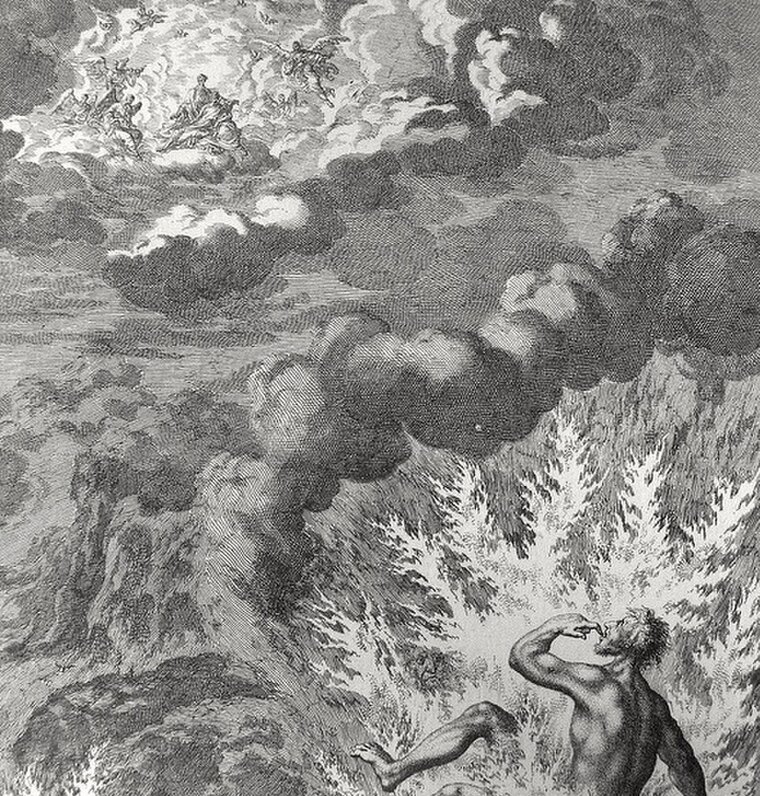
Notice three things. Both men are fully conscious — aware, remembering, speaking. They are in the same realm but on opposite sides: “Abraham’s bosom,” a place of comfort, and “torments.” And a “great gulf” is fixed between them that no one crosses. This is the geography the Old Testament calls Sheol — not soul-sleep, but a waking existence, divided.
The thief: “with me in paradise”
So when Jesus turns to the man dying beside Him and says,
— Luke 23:43
— He is naming the side of comfort. “Paradise” is Abraham’s bosom: rest, not torment. The thief had no time to be baptized, no chance to live a changed life; he had only faith and a cry for mercy — and that was enough to put him on the right side of the gulf. Grace reaches all the way to the last hour.
Christ’s descent — to the realm of the dead, not the lake of fire
Where was Jesus between the cross and the empty tomb? His body lay in Joseph’s grave; His soul went down into the realm of the dead. Peter, preaching Pentecost, quotes David:
— Acts 2:27 (Psalm 16:10)
Paul says He “descended first into the lower parts of the earth” (Ephesians 4:9), and Peter speaks of how He “went and preached unto the spirits in prison” (1 Peter 3:18–19). But He did not go as a prisoner — He went as the victor: “having spoiled principalities and powers, he made a shew of them openly, triumphing over them” (Colossians 2:15). This is what the creed means by “he descended into hell”: He entered Hades, the realm of the dead — not Gehenna, the place of final wrath. His own promise to the thief settles it: that day He was in paradise. (We speak here of the Messiah’s human soul in the realm of the dead; as God, He fills all things — a mystery held with reverence, not pried into.)
“He led captivity captive” — and paradise moved up
Something changed at the resurrection and ascension. Paul writes that when Christ “ascended up on high, he led captivity captive” (Ephesians 4:8) — He emptied the side of comfort and took the righteous dead up with Him. That is why, from the resurrection onward, “paradise” is spoken of as above: Paul was “caught up to the third heaven… into paradise” (2 Corinthians 12:2–4). So a believer who dies now does not wait in a chamber below the earth. For us it is simpler and nearer:
— 2 Corinthians 5:8; cf. Philippians 1:23
To depart is “to be with Christ; which is far better.” Not asleep, not far off — with Him, consciously, awaiting the one thing still to come: the body raised.
Where the unsaved dead are now — and the sentence still ahead
And the other side of the gulf? The unrighteous dead remain in Hades, in the condition the rich man described, but even that is not yet the final state. Scripture is careful about the order: Hades is the holding place; the lake of fire is the sentence, passed at the last judgment. At the Great White Throne,
— Revelation 20:14–15
So the popular idea that people are “in the lake of fire” right now runs ahead of the text. The final judgment has not happened. Hades is the jail awaiting trial; the lake of fire is the verdict. Both are real — and the whole point of the gospel is to see no one go there, for God is “not willing that any should perish” (2 Peter 3:9).
What about “soul sleep”?
Some sincere believers hold that the dead are completely unconscious until the resurrection — often pointing to verses that call death a “sleep” (as in 1 Thessalonians 4:13). It is a view held in good faith, and the Bible does call the body’s rest a sleep. But the passages above describe the person as awake: the rich man and Lazarus speak and remember; the thief is with Christ “to day”; Paul expects to “be with Christ” the moment he departs; and the martyrs under the altar cry out, “How long, O Lord” (Revelation 6:9–11). Taken together, that is why the larger stream of the church has read “sleep” as a tender word for the body laid down, not for a mind switched off.
What the Bible leaves quieter
Honesty requires marking the edges. Scripture gives us the center with great clarity — the dead are conscious; the saved are with Christ; the lake of fire is still future — but it does not satisfy every curiosity, and good people differ on some details. Exactly what Christ “preached unto the spirits in prison” (1 Peter 3:19) has been read more than one way. Whether paradise was truly relocated from below to above, or was always heaven and the language is accommodating our understanding, is a fair question. These we hold with an open hand. “Prove all things; hold fast that which is good” (1 Thessalonians 5:21). What is not uncertain is the thing that decides which side of the gulf you wake on.
Which side — and how
The gulf is fixed after death; it cannot be crossed then. Everything therefore hangs on this side of it. The same Peter who told us where Christ went also told the crowd how to be found, at the last, on the side of comfort:
— Acts 2:38
The thief reached paradise with nothing but faith in his last breath. You have more than a last breath — you have today. Christ has already been down into death and come up holding “the keys of hell and of death” (Revelation 1:18). The question is only which side of His victory you will be standing on.