Here is a sentence a great many people have never once been told, and need to hear: the fire of hell was never built with you in mind. It is a real place, and Jesus spoke of it more than anyone in Scripture — but when He told us who it was prepared for, He did not say people. He said something else entirely.
Two destinies, two blueprints
In the great judgment scene of Matthew 25, the King speaks to two groups — and if you lay His words side by side, you see that each destiny was prepared ahead of time, but for very different occupants:
“Come, ye blessed of my Father, inherit the kingdom prepared for you from the foundation of the world.” — Matthew 25:34
“Depart from me, ye cursed, into everlasting fire, prepared for the devil and his angels.” — Matthew 25:41
Read them together and the design is unmistakable. God prepared a kingdom for people — and He did it “from the foundation of the world,” before you drew a breath, before you could earn or forfeit anything. The fire He prepared for the devil and his angels — the spirits who rebelled and would not repent. Two addresses. One was built for humanity; the other was never meant for a single human soul.
God takes no pleasure in anyone going there
Everything else Scripture says about God’s heart points the same way. Hell is not God’s wish for you grudgingly withheld; it is a destiny He pleads with people to escape:
“As I live, saith the Lord GOD, I have no pleasure in the death of the wicked; but that the wicked turn from his way and live.” — Ezekiel 33:11
He is “not willing that any should perish, but that all should come to repentance” (2 Peter 3:9); He “will have all men to be saved” (1 Timothy 2:4); and He sent His Son “not… to condemn the world; but that the world through him might be saved” (John 3:17). You will search the Bible in vain for a verse where God desires a person in that fire. The whole story is Him moving heaven and earth to keep them out of it.
Then how does anyone end up there?
As an interloper — a trespasser into a doom meant for another, and only ever by his own insistence. The lake of fire is the devil’s own destiny (Revelation 20:10); a person shares it only by sharing the devil’s choice — refusing the light, refusing the kingdom, until he has, in effect, taken the rebel’s side. Jesus could say to hardened men, “Ye are of your father the devil” (John 8:44). And the reason given for anyone’s condemnation is never that God ran out of mercy, but this:
“And this is the condemnation, that light is come into the world, and men loved darkness rather than light, because their deeds were evil.” — John 3:19
No one is assigned to the fire the way the kingdom is given to the blessed. People walk into it backward, past warning after warning and hand after open hand — “whosoever was not found written in the book of life” (Revelation 20:15). It is a self-chosen exile into a place with someone else’s name on the door.
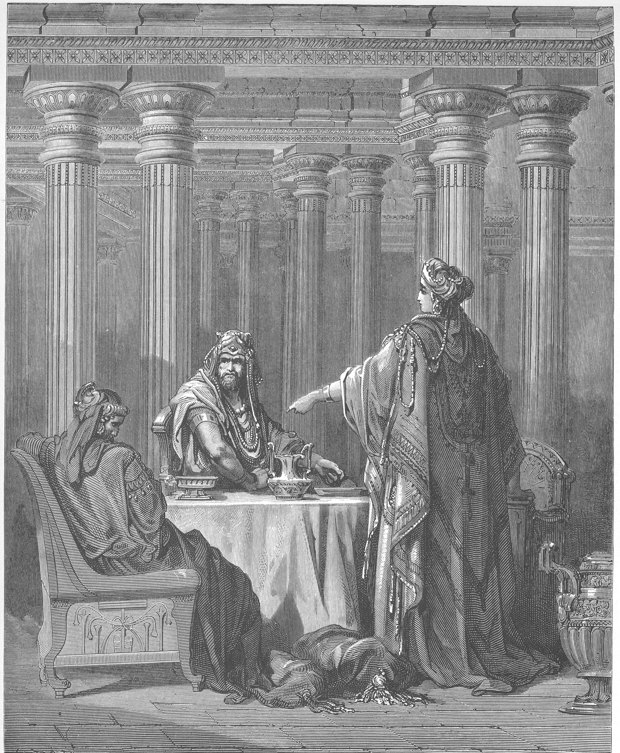
Scripture draws this self-made ruin in a single unforgettable story. Haman — the accuser of an innocent people — raised a gallows fifty cubits high for a man who had done him no wrong, and in the end he was hanged on the very gallows he had built (Esther 7:10). It is the oldest pattern of judgment there is: “Whoso diggeth a pit shall fall therein” (Proverbs 26:27); “his mischief shall return upon his own head” (Psalm 7:16). And the arch-accuser stands behind every Haman: Satan, “the accuser of our brethren” (Revelation 12:10), for whom the fire was first prepared. The gallows, and the fire, are what the accuser built — and whoever finally takes his side steps onto the scaffold of his own making.
The place that was made for you
So turn and look at the destiny that does have your name on it — the one prepared from the foundation of the world. Jesus describes it not as a courtroom but as a wedding feast, and Himself as the Bridegroom:
— Revelation 19:9
That is the heart of it, and it is worth seeing against the backdrop of how this age ends. Peter says “the earth also and the works that are therein shall be burned up” (2 Peter 3:10) — the old order goes up in flame. But the redeemed are not left standing in the fire; they are the Bride, “caught up… to meet the Lord in the air” (1 Thessalonians 4:17), seated at the table. One homely way to say it: the believer is going to the wedding, not staying behind for the burning. The fire takes what was always under sentence; the feast receives what the Father prepared for His children before the world began. “I go to prepare a place for you” (John 14:2).
An honest word, so the comfort doesn’t get bent
This good news must not be stretched into something Jesus did not say. He did not say the fire is empty, or that no one goes there. He plainly said some will hear “Depart,” and that the choice is final at the last. The point is not that hell is harmless — it is that hell was never God’s intention for you, and your name was written, from the beginning, over a different door. That makes the invitation more urgent, not less: a kingdom this freely prepared is a terrible thing to walk past. “Prove all things; hold fast that which is good” (1 Thessalonians 5:21).
Come to the table
If the fire was prepared for the devil and the kingdom was prepared for you, then the only question left is which one you will walk toward. And the door into the kingdom is not hidden — it is the same answer Peter gave the first crowd who asked, cut to the heart, “what shall we do?”
— Acts 2:38
The table is set. The invitation has your name on it. Don’t stay behind for a fire that was never meant to be yours.