The Bible is a tale of two cities. One is built by men who want to reach heaven and make a name for themselves. The other comes down out of heaven, built by God, and bears His name. The first city is Babylon. It appears in Genesis, rises to rule the world in the prophets, falls in a single night, and returns in Revelation as “MYSTERY, BABYLON THE GREAT,” to fall one last time “in one hour.” No other city outside Israel is followed so far through Scripture or foretold in so much detail. To understand where prophecy is going, you have to understand Babylon.
Where it began — Babel
In Hebrew the two names are one word: Bavel. The city first appears as the beginning of Nimrod’s kingdom “in the land of Shinar” (Genesis 10:10), and its founding charter is a sentence that sums up everything Babylon will ever be:
— Genesis 11:4
The tower is man climbing up, the name is man’s own, and the city is built to keep people where they are, against God’s command to fill the earth. God came down, confounded their language and scattered them, “therefore is the name of it called Babel” (Genesis 11:9). That is the pattern every later Babylon follows: glory built without God, ending in confusion. (The scattering and its reversal at Pentecost are told in One Blood and The Languages of the Bible.)
The empire that took Jerusalem
Babylon was a minor power when Isaiah told King Hezekiah, a century ahead of time, that everything in his palace “shall be carried to Babylon: nothing shall be left” and that his own descendants would serve as eunuchs in its king’s palace (Isaiah 39:6-7). In Hezekiah’s day, Assyria was the threat. Babylon rose to replace Assyria, and Habakkuk was told that God Himself was raising the Chaldeans up as the rod of His judgment (Habakkuk 1:5-11).
Jeremiah gave the term: “these nations shall serve the king of Babylon seventy years” (Jeremiah 25:11). Nebuchadnezzar came in three waves, in 605, 597 and 586 BC, and on the last he burned the temple and the city, just as Jeremiah had said he would (Jeremiah 20:4-6; 34:1-5). The cause was not Babylon’s strength but Judah’s sin, after generations of warnings (2 Kings 24:3-4).
Daniel was carried there as a boy (Daniel — greatly beloved), and through him God told the king what his empire was: “Thou art this head of gold” (Daniel 2:38). It was the first of four kingdoms, all to be broken by a stone cut without hands (Nebuchadnezzar’s Dream; Daniel 2). In Daniel’s later vision it is the lion with eagle’s wings (Daniel 7).
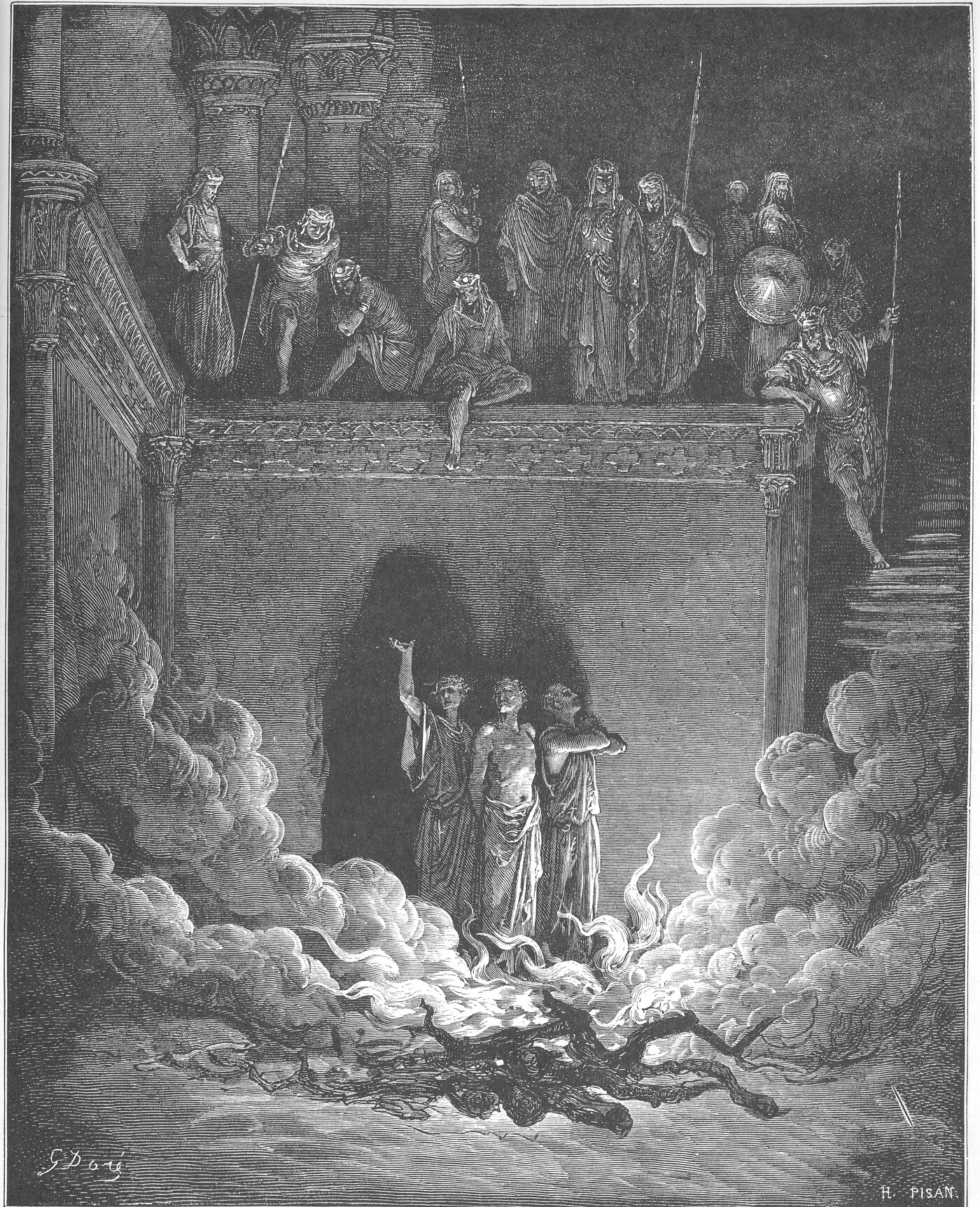
Daniel 3 shows what Babylon wants. Nebuchadnezzar raised a golden image on the plain of Dura and commanded every people, nation and language to fall down and worship it, on pain of the furnace. Shadrach, Meshach and Abednego answered: “Our God whom we serve is able to deliver us… But if not, be it known unto thee, O king, that we will not serve thy gods, nor worship the golden image which thou hast set up” (Daniel 3:17-18). Revelation repeats the scene at the end of the age: an image, a command to worship it, and death for those who refuse (Revelation 13:14-15; see The Mark of the Beast). Babylon has always demanded worship from everyone: “O people, nations, and languages” (Daniel 3:4), “all, both small and great” (Revelation 13:16). Every person who lives under her has to decide whether to bow.
And the king himself, at the height of his pride, said it outright: “Is not this great Babylon, that I have built… by the might of my power, and for the honour of my majesty?” (Daniel 4:30). That is Babel’s “let us make us a name” again. He was humbled to the dust until he learned to “praise and extol and honour the King of heaven” (4:37).
The night Babylon fell
The prophets did not only foretell what Babylon would do. They foretold its fall. Isaiah, around 700 BC, named the conqueror about a century and a half before he took the city: “Thus saith the LORD to his anointed, to Cyrus” (Isaiah 45:1), a king who would open gates and release the captives. Isaiah heard the watchman’s cry: “Babylon is fallen, is fallen; and all the graven images of her gods he hath broken unto the ground” (Isaiah 21:9). He told the “virgin daughter of Babylon” to come down from her throne and sit in the dust (Isaiah 47).
Then, in October 539 BC, it happened in a single night. Belshazzar held a feast and drank from the vessels taken from God’s temple. A hand wrote on the wall: “MENE, MENE, TEKEL, UPHARSIN… Thou art weighed in the balances, and art found wanting” (Daniel 5:25-28). “In that night was Belshazzar the king of the Chaldeans slain” (5:30). The Persians took the city with little resistance; Herodotus reports that they diverted the Euphrates and entered along the riverbed. Belshazzar himself was once cited as proof that Daniel was fiction, because ancient lists named Nabonidus as Babylon’s last king. Then the Nabonidus Cylinder turned up naming Belshazzar as his son. Father and son were reigning together, which is why Belshazzar could offer Daniel only the place of “third ruler in the kingdom” (5:16, 29).
Jeremiah 50–51 is the longest oracle against Babylon in Scripture (Jeremiah 50:1–51:64). Jeremiah wrote it on a scroll and sent it to Babylon with Seraiah, with an instruction: after reading it, “bind a stone to it, and cast it into the midst of Euphrates: And thou shalt say, Thus shall Babylon sink, and shall not rise” (Jeremiah 51:63-64). Remember that stone. It comes back in Revelation.
Overrun is not the same as ruined
The prophets describe two different things, and it matters to keep them apart.
The overrunning happened in 539 BC. Babylon was taken, not destroyed. Cyrus entered the city almost without a fight, and it went on as a great city under the Persians. Two centuries later Alexander the Great meant to make it his capital, and he died there in 323 BC. Belshazzar’s kingdom ended that night, but the city’s walls, temples and people remained.
The utter ruin is something else. Isaiah says Babylon “shall be as when God overthrew Sodom and Gomorrah. It shall never be inhabited, neither shall it be dwelt in from generation to generation” (Isaiah 13:19-20). Jeremiah repeats it: “As God overthrew Sodom and Gomorrah… so shall no man abide there” (Jeremiah 50:40); “thou shalt be desolate for ever” (51:26). Sodom was not slowly emptied over centuries. It was destroyed in a day by fire from heaven, and “the smoke of the country went up as the smoke of a furnace” (Genesis 19:28). Nothing like that happened in 539 BC. The old city faded slowly over many generations until it was a mound in the desert.
So the Sodom-like overthrow did not happen in Daniel’s time. Some readers hold that the long decline into ruins fulfilled it. Others note that Isaiah 13 sets Babylon’s overthrow inside “the day of the LORD,” when “the stars of heaven… shall not give their light” (13:9-10), and they look for its fulfillment at the end, in the Babylon of Revelation that “shall be utterly burned with fire” and whose plagues “come in one day” while kings watch “the smoke of her burning” (Revelation 18:8-9). That is a Sodom-like end: sudden, by fire, and final. The historical record for the ancient city, including the modern ruins and the twentieth-century rebuilding, is laid out on Fulfilled Prophecies About Cities.
Seventy years, and the first “come out”
The exile had an end date. “After seventy years be accomplished at Babylon I will visit you… in causing you to return to this place” (Jeremiah 29:10). In the first year of the Persians, Daniel read that promise “by books” and began to pray (Daniel 9:2). The answer to that prayer was the prophecy of the Seventy Weeks. Cyrus’s decree sent the exiles home, as his own clay cylinder records.
Meanwhile, Jeremiah had told the captives to “seek the peace of the city whither I have caused you to be carried away captives” (29:7): live in Babylon, work there, pray for it. But the prophets also gave them a summons for when the time came: “Go ye forth of Babylon, flee ye from the Chaldeans” (Isaiah 48:20); “My people, go ye out of the midst of her, and deliver ye every man his soul” (Jeremiah 51:45). God’s people could live in Babylon, but they were never to belong to it.
Mystery, Babylon the Great
Six centuries after the city fell to Cyrus, John hears the old cry again: “Babylon is fallen, is fallen, that great city, because she made all nations drink of the wine of the wrath of her fornication” (Revelation 14:8). Then he is shown her:
“And the woman was arrayed in purple and scarlet colour, and decked with gold and precious stones and pearls, having a golden cup in her hand full of abominations… And upon her forehead was a name written, MYSTERY, BABYLON THE GREAT, THE MOTHER OF HARLOTS AND ABOMINATIONS OF THE EARTH.” — Revelation 17:4-5
She rides a scarlet beast, is “drunken with the blood of the saints” (17:6), and is “that great city, which reigneth over the kings of the earth” (17:18). Chapter 18 tells her fall in two voices: heaven rejoices, while the kings, merchants and shipmasters of the earth weep because their trade is gone. The cargo list runs from gold and silk to horses and chariots and ends with “slaves, and souls of men” (Revelation 18:13). Then Jeremiah’s stone returns:
— Revelation 18:21 (compare Jeremiah 51:63-64)
Revelation quotes Isaiah 21 and borrows Jeremiah 51’s sign almost act for act. John is telling us the Babylon of the prophets has not finished its story. It has one more fall to come, and this time it will be “in one hour” (18:10). The title’s “mystery” belongs with the other mysteries of Scripture (The Mysteries of God). It is the enemy’s counterfeit, unmasked at the end.
Who is she? Five readings
Christians answer this several ways, and the text leaves room for each:
Every reading agrees on what matters most: Babylon is real, her fall is certain, and God calls His people out of her.
A tale of two cities — Babylon and the New Jerusalem
Revelation shows Babylon beside the city that replaces her, and the pairing is on purpose. The same angel shows John both: “Come hither; I will shew unto thee… the great whore” (17:1), and later, “Come hither, I will shew thee the bride, the Lamb’s wife” (21:9). Read side by side:
Both cities offer beauty, wealth and a name. Babylon sells them, and in the end she sells people too: her cargo ends with “slaves, and souls of men” (18:13). The New Jerusalem gives freely, and gives God Himself. Abraham left Ur of the Chaldees, Babylon’s own land, because “he looked for a city which hath foundations, whose builder and maker is God” (Hebrews 11:10). (More on the other city: The New Jerusalem and The Bride of Christ.)
The Apostolic (Oneness) reading — whose name?
Read from Genesis to Revelation, the Babylon story turns on a name. Babel was built so that “we” might “make us a name.” Nebuchadnezzar renamed Daniel and his friends after Babylon’s gods (Daniel 1:7). The harlot wears “a name written” on her forehead, and the beast she rides is “full of names of blasphemy” (17:3). Against all of it stands the one Name: “there is none other name under heaven given among men, whereby we must be saved” (Acts 4:12), the Name that is “in their foreheads” in the city of God (22:4) and that the 144,000 bear as “his Father’s name” (14:1; see The Name of God). Apostolic readers note that the confusion of Babel’s tongues was answered at Pentecost, when the scattered nations heard “in our own tongue” (Acts 2:8), and the first sermon of the church ended with baptism “in the name of Jesus Christ.” Bishop Nathaniel J. Wilson puts it plainly: “Where Babylon sought to ‘make a name,’ here, God gives them His saving name,” and Acts 2 is “the prescription for Babylon’s global confusion.”1 Babylon is the city where people make a name for themselves. Zion is the city where they are called by His name.
“Come out of her, my people”
The last word Scripture speaks about Babylon is not a timeline. It is an invitation:
— Revelation 18:4
Daniel shows that you can live in Babylon without bowing to it. But no one is saved by being a better Babylonian. The way out is the way into the other city. Peter gave that answer when the crowd at Pentecost asked what to do: “Repent, and be baptized every one of you in the name of Jesus Christ for the remission of sins, and ye shall receive the gift of the Holy Ghost” (Acts 2:38). Babylon will be found no more at all. The city whose builder and maker is God has its gates open, and they will not be shut.
1 Nathaniel J. Wilson, Apostolic Pentecostal Theology, 2nd ed. (2025), ch. 22, pp. 501 and 524. ↑