Strip away the familiarity and ask the question plainly: what is this book? Not ancient literature, not a collection of human wisdom about the divine — the Bible claims to be something no other book claims: God’s own Word to man, unveiled slowly across the centuries and gathered into one story. Here is what it says about itself.
Not man’s book about God — God’s book to man
The Bible does not present itself as men reaching up to explain God, but as God reaching down to speak:
“All scripture is given by inspiration of God, and is profitable for doctrine, for reproof, for correction, for instruction in righteousness.” — 2 Timothy 3:16
“For the prophecy came not in old time by the will of man: but holy men of God spake as they were moved by the Holy Ghost.” — 2 Peter 1:21
This is what theologians call special revelation — God disclosing Himself in words — distinct from the general revelation of creation, which shows that God is but not who He is or how to be saved (Romans 1:19-20). The heavens declare His glory; only the Word tells His name and His plan.
Unveiled progressively — two Testaments, one story
God did not hand down the whole book at once. He revealed Himself in stages, like a picture coming slowly into focus:
“God, who at sundry times and in divers manners spake in time past unto the fathers by the prophets, hath in these last days spoken unto us by his Son.” — Hebrews 1:1-2
The Old Testament prepares, foreshadows, and anticipates; the New fulfills, interprets, and completes. They are not two disconnected books but one continuous revelation, and its center is a Person: “all the promises of God in him are yea, and in him Amen” (2 Corinthians 1:20). (See God’s Unfolding Revelation for the whole arc through the covenants.)
Entrusted to Israel — the chosen repository
God did not drop His Word into the air; He committed it to a people, in real history. Israel was chosen as the vessel to receive, preserve, transmit, and finally bring forth the Word — and the Messiah:
“What advantage then hath the Jew? … much every way: chiefly, because that unto them were committed the oracles of God.” — Romans 3:1-2
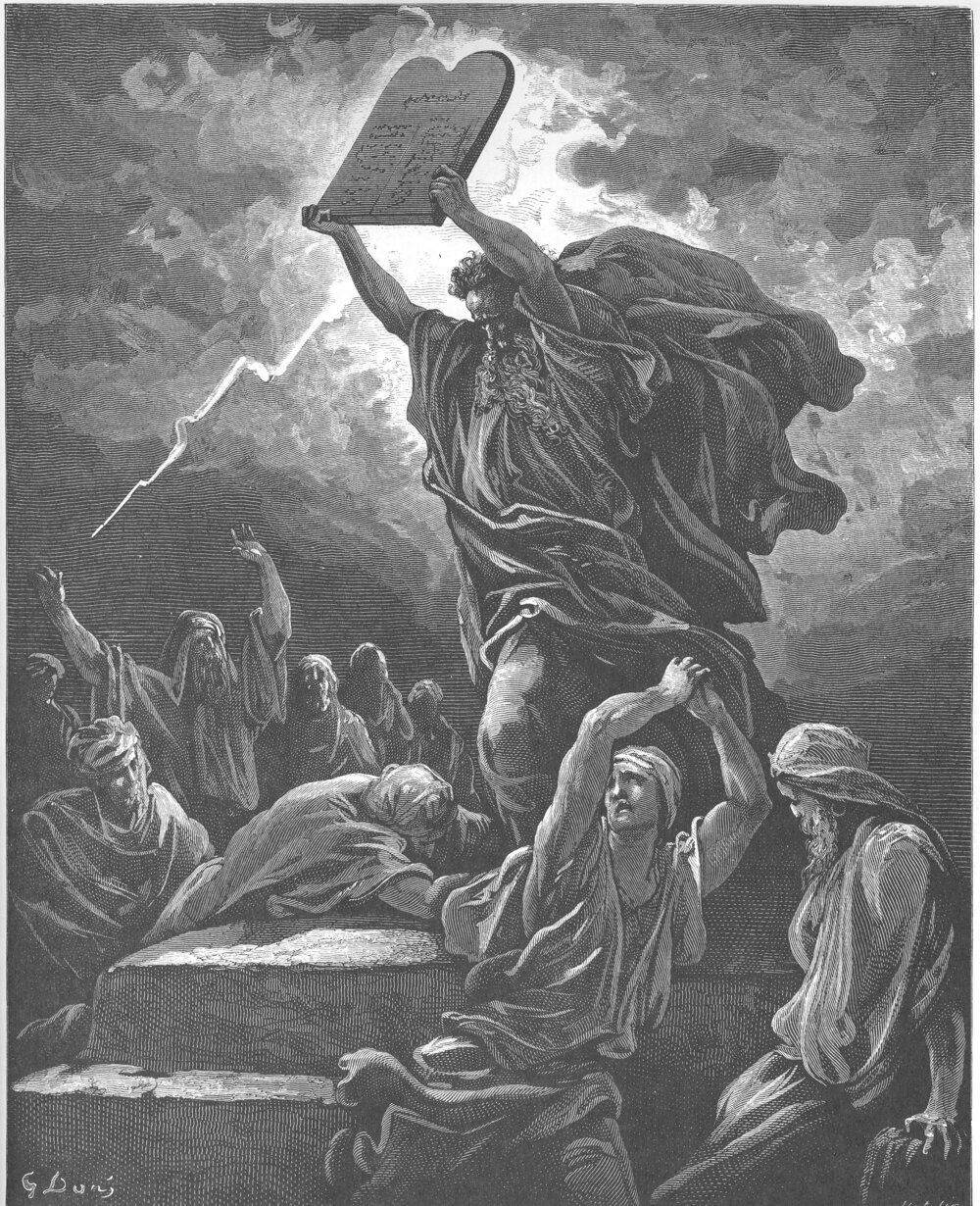
To Israel belonged “the adoption, and the glory, and the covenants, and the giving of the law, and the service of God, and the promises” (Romans 9:4). The chosen nation was not chosen for privilege but for stewardship — a particular people in a particular land, so that through them blessing could come to “all families of the earth” (Genesis 12:3). The Bible is historical and particular before it is universal.
God’s testament — a will sealed in blood
We call its two halves “Testaments” for a reason: a testament is a will, and the Bible is God’s binding testament to men — His recorded will, His covenant, His testimony of what He has done and promised. And a will carries a solemn feature:
“For where a testament is, there must also of necessity be the death of the testator. For a testament is of force after men are dead: otherwise it is of no strength at all while the testator liveth.” — Hebrews 9:16-17
The New Testament is a will put in force by a death — the blood of the One who made it. “This cup is the new testament in my blood, which is shed for you” (Luke 22:20). Every covenant before it was pointing to that sealing. (See the feasts and the Lamb slain.)
What it is for — not information, but life
Here is the thing most easily missed: the Bible was never given merely to be known. It was given to bring you to Someone. Jesus said it plainly to the experts who had memorized it:
“Search the scriptures; for in them ye think ye have eternal life: and they are they which testify of me. And ye will not come to me, that ye might have life.” — John 5:39-40
John says why he wrote: “these are written, that ye might believe that Jesus is the Christ, the Son of God; and that believing ye might have life through his name” (John 20:31). The written Word points to the Living Word; the Book exists to bring you to Christ. And because it is God speaking, it is not inert: “the word of God is quick, and powerful, and sharper than any twoedged sword” (Hebrews 4:12).
How it closes — and that it is closed
The whole unveiling comes to its climax in the last book — “The Revelation of Jesus Christ” (Revelation 1:1): the final disclosure of the Lamb, the judgment of the nations, the defeat of evil, and “a new heaven and a new earth.” And the canon shuts with a warning that it is complete:
“If any man shall add unto these things… and if any man shall take away from the words of the book of this prophecy…” — Revelation 22:18-19
“The faith which was once delivered unto the saints” (Jude 3) stands finished. Later writings may illuminate or apply it; none add to it.
A book that invites its own testing
Here is one more thing that sets it apart from every other sacred book: it does not ask for blind acceptance — it dares you to test it. Where most religions rest on private, unverifiable revelation, the Bible stakes falsifiable claims out in the open, and keeps saying, in effect, check Me.
“Prove me now herewith, saith the LORD of hosts…” (Malachi 3:10)
“Come now, and let us reason together, saith the LORD…” (Isaiah 1:18)
“Prove all things; hold fast that which is good.” (1 Thessalonians 5:21)
The Bereans were even commended for not taking the apostle Paul’s word without checking it: they “searched the scriptures daily, whether those things were so” (Acts 17:11). And God makes predictive prophecy the very test of His deity — “shew the things that are to come hereafter, that we may know that ye are gods” (Isaiah 41:23) — with a plain rule for failure: “if the thing follow not, nor come to pass… the LORD hath not spoken” (Deuteronomy 18:22). One false prediction would sink the claim. (That is the premise of this whole site — fulfilled city prophecies, Josiah named three centuries early, Daniel’s seventy weeks, and 1,817 predictions laid open to the evidence.)
And it goes where no mythmaker would dare: it volunteers its own disproof. Jesus staked everything on one checkable event — “Destroy this temple, and in three days I will raise it up” (John 2:19). The empty tomb could have been refuted in an afternoon by producing a body. Paul names the witnesses — “above five hundred brethren at once; of whom the greater part remain unto this present” (1 Corinthians 15:6) — and then hands the skeptic the knife: “if Christ be not risen, then is our preaching vain… ye are yet in your sins” (1 Corinthians 15:14-17). A faith built on a lie hides from scrutiny; the gospel runs toward it.
Why such confidence? Because the One who cannot lie wrote a book whose every promise holds:
“For all the promises of God in him are yea, and in him Amen, unto the glory of God by us.” — 2 Corinthians 1:20
Test it, and you find it true. Prove Him, and He proves faithful. The promises are not maybes; in Christ they are already Yes — Yea, and Amen.
I am a living witness to its unfailing truth. I have put God’s word to the test across a lifetime — a devil cast out, the gift of the Holy Ghost received, a retirement handed over on nothing but a promise of “a better return” — and not one word of it has failed me yet. Prove Him, and He proves faithful.
Read the whole story →The honest part
Christians do differ on the extent of the canon — the Jewish Scriptures (the Tanakh), the Protestant Old and New Testaments (66 books), and the Catholic and Orthodox canons (which include the deuterocanonical / apocryphal books) do not all draw the line in the same place. That is a real and honest discussion. But on what the Bible is — God’s inspired, progressive self-revelation, entrusted through Israel, fulfilled in Christ, and closed in Revelation — the historic Christian witness is one. Weigh it for yourself: “prove all things; hold fast that which is good” (1 Thessalonians 5:21).
So, what is the Bible?
It is God’s own Word, progressively revealed; recorded in Old and New Testaments; grounded in the history of creation and of Israel, the custodians of the oracles; disclosing the whole plan of redemption; given as God’s testament sealed in the blood of Christ; and ending with the Revelation of Jesus Christ. And its aim is you — that reading, you would come to the One it is all about:
“Repent, and be baptized every one of you in the name of Jesus Christ for the remission of sins, and ye shall receive the gift of the Holy Ghost.” — Acts 2:38