The garden, the betrayal, the cross — three deepening wounds, and every one of them a mark of love. Each was a step He did not have to take, and took anyway. By the end He carried the proof of it in His own body — and carried it, risen, into heaven.
The garden — love is chosen
Before a single hand was laid on Him, love had already begun to bleed. In Gethsemane there were no soldiers yet, no nails — only a will bending itself to the Father in the dark.
“Father, if thou be willing, remove this cup from me: nevertheless not my will, but thine, be done… and his sweat was as it were great drops of blood falling down to the ground.” — Luke 22:42-44
That is the first mark of love: it is chosen. He was not trapped. He could still have risen from His knees and walked back over the brook, and no one could have stopped Him. He wrestled it through alone, in the place where escape was still possible, and chose the cup. Love decided before it suffered. (See also Gethsemane — the agony in the garden.)
The betrayal — love keeps loving
Then came the cruelest wound of all, because it came dressed as affection. The sign of love became the instrument of treachery:
“Judas, betrayest thou the Son of man with a kiss?” — Luke 22:48
And hear how He answered it: “Friend, wherefore art thou come?” (Matthew 26:50). Friend — to the man selling Him for silver. That is the second mark of love: it keeps loving the one who wounds it. Centuries before, Zechariah had named this exact grief — “What are these wounds in thine hands? Then he shall answer, Those with which I was wounded in the house of my friends” (Zechariah 13:6). The deepest marks are given by the ones closest in.
The cross — love bears the weight
And then the nails. Love laid down its own hands to be pierced. On the road He fell beneath the beam, and a stranger, Simon of Cyrene, was compelled to help bear it (Mark 15:21) — a picture of every believer who has ever been called to take up a cross behind Him.
“Greater love hath no man than this, that a man lay down his life for his friends.” — John 15:13
He laid it down for the very ones driving the spikes, praying as they worked: “Father, forgive them; for they know not what they do” (Luke 23:34). “He was wounded for our transgressions, he was bruised for our iniquities… and with his stripes we are healed” (Isaiah 53:5). That is the third and final mark of love: it bears the full weight, to the end, for those who do not deserve it and do not even know what they are doing.
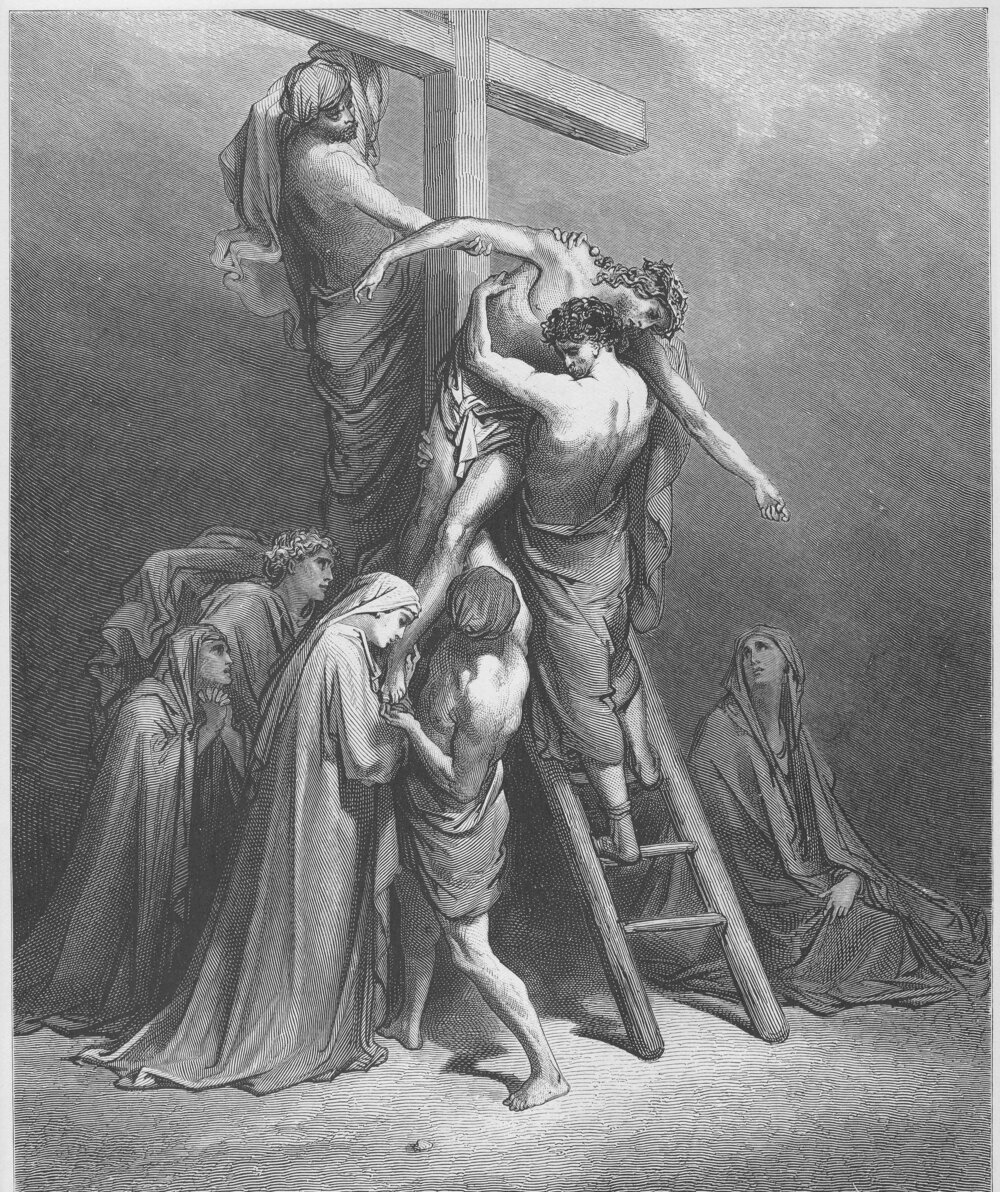
And here is the wonder — He kept the marks
He did not rise smooth and unscarred, erasing the whole ordeal as if it had never happened. He rose still bearing the prints.
“Behold my hands and my feet, that it is I myself.” — Luke 24:39
“Reach hither thy finger, and behold my hands; and reach hither thy hand, and thrust it into my side.” — John 20:27
The nail prints and the spear-wound are the one thing from this earth He carried into glory. John still sees Him there as “a Lamb as it had been slain” (Revelation 5:6). And at His return, “they shall look upon me whom they have pierced” (Zechariah 12:10; Revelation 1:7) — the whole world will at last read the marks for what they are.
That is why they are the marks of love and not merely the wounds of Calvary. A wound is something done to you; a mark is something you keep. He chose to keep them. They are love’s permanent signature, graven where He had already said our names were written: “Behold, I have graven thee upon the palms of my hands” (Isaiah 49:16). When He looks at His own scarred hands, He sees us written there. When we look at them, we see what His love cost.
What the marks ask of us
Love like this is not meant to be admired from a distance; it asks to be answered. The same Jesus who bore these marks told the Church, through Peter, exactly how to come into them — to take His saving name, to be buried with Him and raised, to receive His Spirit:
“Repent, and be baptized every one of you in the name of Jesus Christ for the remission of sins, and ye shall receive the gift of the Holy Ghost.” — Acts 2:38
The marks were made for you. The only fitting answer is to belong to the One who kept them.
For a sober, medical description of exactly what our Savior endured — the bloody sweat of Gethsemane (hematidrosis), the scourging, the nails through the wrists, and the cause of death — read Dr. C. Truman Davis’s widely-cited physician’s account. The same conclusions were reached in the peer-reviewed study “On the Physical Death of Jesus Christ” (JAMA, 1986). (External medical reference — opens in a new tab.)
Read the physician’s account →