Of the thirty-three years Jesus lived, the Gospels give us barely three in any detail. A handful of pages cover His birth and infancy, exactly one scene from His boyhood, then roughly three years of ministry, and the week that changed the world. Everything else is silence. That is not a flaw in the record — it is part of the message.
It begins before the birth — Mary and Elizabeth
His story in the Gospels opens before He is even born. Newly told by the angel that she would bear the Christ, Mary “went into the hill country with haste” to her cousin Elizabeth (Luke 1:39-40). And at the sound of Mary’s greeting, something astonishing happened:
“the babe leaped in her womb; and Elisabeth was filled with the Holy Ghost… Blessed art thou among women, and blessed is the fruit of thy womb. And whence is this to me, that the mother of my Lord should come to me?” — Luke 1:41-43
The first human being ever to recognize the Lord did so while both were still in the womb — the unborn John the Baptist leaping for joy before the unborn Christ. And Mary answered with the song the Church has sung ever since: “My soul doth magnify the Lord, and my spirit hath rejoiced in God my Saviour” (Luke 1:46-47). She stayed about three months and returned home (Luke 1:56). Before a manger, before a single word or step, He was already known, already magnified. The hidden life was never once hidden from heaven.
The little that is actually recorded
Of His first thirty years, here is nearly all that we are told: He was born in Bethlehem; taken as an infant to Egypt and back to Nazareth; and — at age twelve — found in the temple among the teachers, “both hearing them, and asking them questions” (Luke 2:46). To His worried parents He gave His first recorded words:
“How is it that ye sought me? wist ye not that I must be about my Father’s business?” — Luke 2:49
And then — nothing. The curtain closes for about eighteen years and does not open again until, near the age of thirty, He comes to the Jordan to be baptized and steps into His public ministry. One scene, and then silence.
Of the house of David — the royal lineage
Hidden as His life was, in one respect it was never obscure: He was born of the royal line of David. The New Testament opens by placing Him there in its very first words — “The book of the generation of Jesus Christ, the son of David, the son of Abraham” (Matthew 1:1). Two genealogies are given, and both run to David: Matthew traces the legal, royal line through Joseph, from Abraham down through David and the kings of Judah (Matthew 1); Luke traces a line through David’s son Nathan, commonly understood as Mary’s own descent (Luke 3:23-38). By either road, the blood of David ran in Him.
This was no accident of pedigree — it was prophecy kept. God had sworn that Messiah would be David’s seed and would sit on David’s throne: “I will set up thy seed after thee… and I will stablish the throne of his kingdom for ever” (2 Samuel 7:12-13); “Of the increase of his government and peace there shall be no end, upon the throne of David” (Isaiah 9:7). So the angel told Mary, “the Lord God shall give unto him the throne of his father David… and of his kingdom there shall be no end” (Luke 1:32-33). The crowds felt it too, crying “Hosanna to the Son of David” (Matthew 21:9). Royal blood at a carpenter’s bench — the rightful heir of David’s throne, growing up unnoticed in a Galilean village. (See the Davidic prophecies and Is Jesus the Messiah?.)
The silent years — God hallowed the ordinary
What filled those hidden years? Scripture gives us one quiet summary and little more: “he went down with them, and came to Nazareth, and was subject unto them… And Jesus increased in wisdom and stature, and in favour with God and man” (Luke 2:51-52). He grew. He obeyed His parents. He worked. The townspeople knew Him not as a prodigy but as a tradesman. Matthew records their words as “Is not this the carpenter’s son?” (Matthew 13:55), and Mark as “Is not this the carpenter, the son of Mary?” (Mark 6:3) — the one naming Joseph’s trade, the other showing the Son had taken it up Himself.
Think of what that means. The Son of God spent roughly nine-tenths of His life in total obscurity — a workbench, a small town, an ordinary family, the same chores and seasons as everyone else — and heaven called it good. He was “about His Father’s business” at twelve, and He was still about it at twenty-nine, in a carpenter’s shop where no Gospel bothered to follow Him. That is a dignity poured over every hidden, faithful, unremarkable life. If most of His years were unseen and unrecorded and yet pleased God, then your unseen years are not wasted either.
Joseph disappears
Notice who quietly vanishes from the story. Joseph is there at the birth, the flight to Egypt, and the temple at age twelve — and after that, never again. By the wedding at Cana it is only “the mother of Jesus” who is named. And at the cross, Jesus entrusts Mary not to a husband but to the apostle John: “Woman, behold thy son!… Behold thy mother!” (John 19:26-27) — which He would not have done had Joseph been alive. The silence tells the story: Joseph almost certainly died during those hidden years, and Jesus, the eldest, took up the trade — the carpenter — and carried a widowed mother and a household of younger siblings. The hidden years were working years, and some of them were likely years of grief.
A spotty family — who finally believed
His family relationships were strained, and the Gospels do not hide it. His brothers are named — “James, and Joses, and Juda, and Simon” — along with sisters (Mark 6:3; Matthew 13:55-56), and for most of His life they did not believe Him:
“For neither did his brethren believe in him.” — John 7:5
Once His own family came to lay hold of Him, “for they said, He is beside himself” (Mark 3:21), and He answered the crowd, “Who is my mother, or my brethren?… whosoever shall do the will of God, the same is my brother” (Mark 3:33-35). His own flesh and blood thought He had lost His mind.
But that is not where their story ends — and this is the hope in it. After the resurrection, the risen Christ appeared personally to James (1 Corinthians 15:7). Suddenly the once-unbelieving brothers are in the upper room, “with the women, and Mary the mother of Jesus, and with his brethren” (Acts 1:14). James became a pillar of the Jerusalem church — “James the Lord’s brother” (Galatians 1:19) — and wrote the epistle that bears his name; Jude wrote another. The family that called Him crazy became His church. If you are praying for relatives who do not yet believe, remember: sometimes the ones closest take the longest, and still come all the way home.
Mary kept all these things in her heart
If the hidden years are known to us at all, it is largely because one person treasured them. Twice Luke tells us so. Of the night of the shepherds at the manger: “But Mary kept all these things, and pondered them in her heart” (Luke 2:19). And after the temple at age twelve: “his mother kept all these sayings in her heart” (Luke 2:51). She did not yet understand them — she pondered. She held on to things she could not explain, and kept them safe for the day they would make sense.
And unlike His brothers, Mary never let go. She is there at the beginning in Bethlehem; there at Cana when He worked His first sign; there at the foot of the cross when nearly everyone else had fled (John 19:25-27); and there in the upper room, praying, as they waited for the promised Spirit (Acts 1:14). From the manger to the cross to Pentecost, the same faithful heart, keeping and pondering to the end. Much of what we can know of those quiet years we may owe to a mother who remembered.
The Jordan and the wilderness — the silence breaks
But before He stepped out of obscurity, a voice went ahead of Him. Out in the desert, John the Baptist was crying the words Isaiah had written seven centuries earlier: “The voice of one crying in the wilderness, Prepare ye the way of the LORD, make his paths straight” (Isaiah 40:3; Matthew 3:3). The forerunner came first — turning hearts, leveling the road, pointing away from himself: “Behold the Lamb of God, which taketh away the sin of the world” (John 1:29). And then the One he announced stepped down into the water. (See John the Baptist — the forerunner.)
At about thirty, the hidden years ended at a riverbank. Jesus came to be baptized of John in the Jordan, and the moment He rose from the water, heaven opened over Him:
“the heavens were opened unto him, and he saw the Spirit of God descending like a dove, and lighting upon him: and lo a voice from heaven, saying, This is my beloved Son, in whom I am well pleased.” — Matthew 3:16-17
Thirty years unannounced, and then the voice from heaven itself breaks the silence to name Him. Immediately the Spirit led Him into the wilderness, where He fasted forty days and was tempted of the devil — and He turned back every assault not with raw power but with the Word: “It is written” (Matthew 4:1-11; Luke 4:1-13). The One who could have turned stones to bread chose to overcome exactly as we must. Only then did He begin to preach. (See Who Is Jesus? on the Godhead revealed at the Jordan.)
The three years we do know
Then the silence breaks, and the four Gospels pour nearly all their pages into about three years — the baptism, the miracles, the parables, the long walk toward Jerusalem, and the cross. Even then, John admits the record is only a fraction: “there are also many other things which Jesus did, the which, if they should be written every one, I suppose that even the world itself could not contain the books” (John 21:25). (See the ministry years, His parables, and His miracles.)
Boldness they admired, power that left them amazed
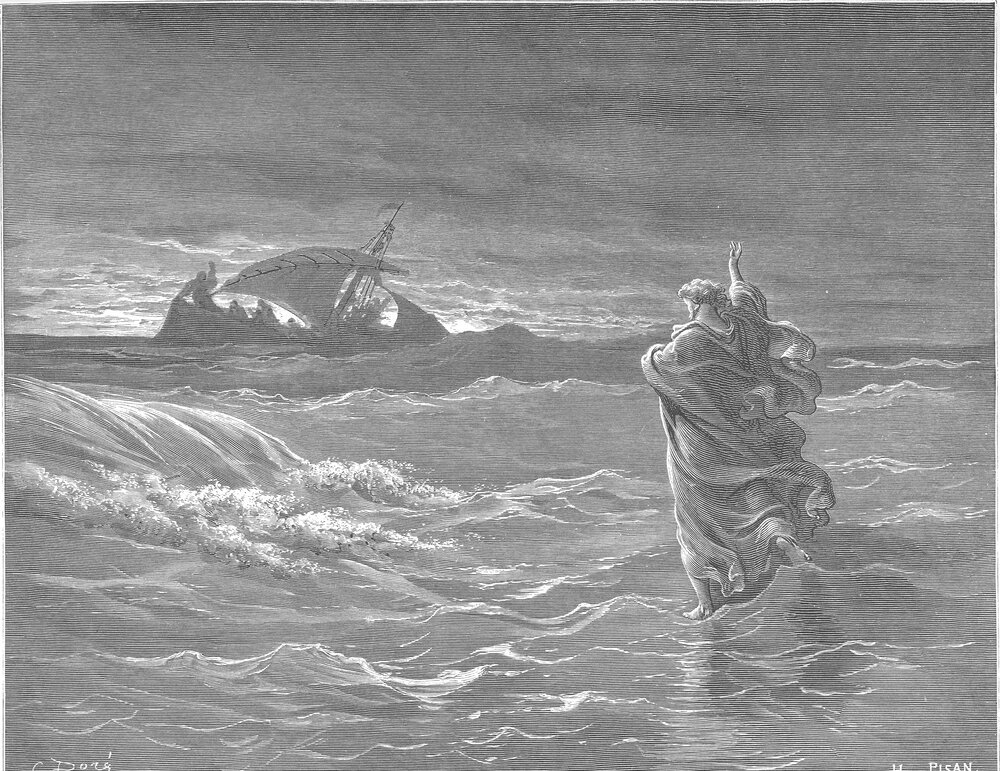
Those who walked closest to Him never quite got used to Him. They admired His sheer boldness — the way He cleansed the temple with a whip of cords (John 2:15), faced down the Pharisees to their faces, and taught “as one having authority, and not as the scribes” (Mark 1:22), until even the officers sent to arrest Him came back empty-handed, saying, “Never man spake like this man” (John 7:46). And yet, just when they thought they had taken His measure, His power would bring them up short again. He stilled a storm with a word, and the seasoned fishermen “feared exceedingly, and said one to another, What manner of man is this, that even the wind and the sea obey him?” (Mark 4:41). He walked on the water, and they “were sore amazed… and worshipped him, saying, Of a truth thou art the Son of God” (Matthew 14:33). After one miraculous catch of fish, Peter fell at His knees: “Depart from me; for I am a sinful man, O Lord” (Luke 5:8). Even on the last road up to Jerusalem, “they were amazed; and as they followed, they were afraid” (Mark 10:32). Three years at His side, and He never stopped astonishing them.
“See thou tell no man” — He kept His own fame in check
Even in the years of His ministry, Jesus was strikingly careful not to be famous. Again and again, after a miracle, He charged those He healed to keep it quiet. To the cleansed leper: “See thou say nothing to any man” (Mark 1:44). When He raised Jairus’ daughter, He “charged them straitly that no man should know it” (Mark 5:43). After opening deaf ears, “he charged them that they should tell no man; but the more he charged them, so much the more a great deal they published it” (Mark 7:36). He even silenced the demons who screamed His identity — He “suffered not the devils to speak, because they knew him” (Mark 1:34). And when the crowds, fed and amazed, “would come and take him by force, to make him a king, he departed… himself alone” (John 6:15).
Why would the Son of God hide His own glory? Matthew tells us it fulfilled the prophecy of the gentle Servant: “he charged them that they should not make him known: that it might be fulfilled which was spoken by Esaias the prophet… He shall not strive, nor cry; neither shall any man hear his voice in the streets” (Matthew 12:16-19; Isaiah 42:1-3). But there was wisdom in it as well. He would not be made into a political king or a crowd’s spectacle; He refused to let applause set His course or force His hand before “his hour” had come (John 7:6). He came not to be celebrated but to lay down His life — and a man who will not be ruled by His own fame is free to obey God alone. The same restraint that covered Nazareth covered Galilee: power under perfect control.
His face set toward the ending
And all that restraint had a direction. The quiet of Nazareth, the hushed miracles, the refusing of crowns — none of it was aimlessness. From the first His face was set toward one city and one hour. Luke marks the turning point: “when the time was come that he should be received up, he stedfastly set his face to go to Jerusalem” (Luke 9:51). He knew exactly what waited there, and told the twelve plainly: “the Son of man shall be betrayed… and they shall condemn him to death… and the third day he shall rise again” (Matthew 20:18-19). The prophet had foreseen that very resolve: “I set my face like a flint, and I know that I shall not be ashamed” (Isaiah 50:7).
He was not swept to the cross by His enemies; He walked to it, on purpose, from the beginning. “No man taketh it from me, but I lay it down of myself” (John 10:18). Every hidden year and every silenced miracle had been pointing here. (See Gethsemane and The Marks of Love.)
And it was all on a clock. For years He moved under “mine hour is not yet come” (John 2:4; 7:6), until at last He could say, “The hour is come, that the Son of man should be glorified” (John 12:23). The timing was not vague: Daniel had numbered the very era in which Messiah would be “cut off” (Daniel 9:26), and He kept the appointment — dying as the true Passover Lamb at the feast itself (“Christ our passover is sacrificed for us,” 1 Corinthians 5:7). He carried an immense assignment under a fixed deadline: everything written of Him “in the law of Moses, and in the prophets, and in the psalms” had to come to pass — “all things must be fulfilled, which were written” (Luke 24:44). That is part of why so much of His life was spent hidden and restrained: He was not idling, and He was not hurried — He was keeping perfect pace with a schedule set before the world began, until the moment He could bow His head and say, “It is finished” (John 19:30). (See how many prophecies He fulfilled and Daniel’s seventy weeks.)
The last forty days — spotty, but eventful
It began on the third day, at an empty tomb. The women came at dawn with spices and found the stone rolled away and an angel waiting: “He is not here: for he is risen, as he said” (Matthew 28:6). Death had done its worst and lost. What follows is the strangest, gladdest postscript to any life ever lived.
His time among us ends much the way the early years began — half-hidden. For forty days after the resurrection He appears and disappears: He “vanished out of their sight” at Emmaus (Luke 24:31); He stood among them “when the doors were shut” (John 20:19); Mary mistook Him for the gardener, the disciples did not know Him on the beach. Scattered, sudden, here-then-gone.
And yet those few weeks were crowded with glory. Luke sums it up:
“he shewed himself alive after his passion by many infallible proofs, being seen of them forty days, and speaking of the things pertaining to the kingdom of God.” — Acts 1:3
Into those spotty appearances He packed the proof of the resurrection (Thomas’ hand in the wounds; the breakfast of fish), an appearance to “above five hundred brethren at once” (1 Corinthians 15:6), the restoring of Peter, the Great Commission — and then the promise that makes the whole story turn:
“wait for the promise of the Father… ye shall be baptized with the Holy Ghost not many days hence.” — Acts 1:4-5
Then “he was taken up; and a cloud received him out of their sight” (Acts 1:9).
Last of all — the risen Christ met Paul
The appearances did not quite end at the ascension. There was one more — later, out of sequence, and granted to the Lord’s worst enemy. Saul of Tarsus was on the road to Damascus to arrest believers when a light from heaven struck him down and a voice said, “Saul, Saul, why persecutest thou me?… I am Jesus whom thou persecutest” (Acts 9:4-5). Blinded three days, then healed, filled with the Spirit, and baptized — “arise, and be baptized, and wash away thy sins, calling on the name of the Lord” (Acts 22:16) — the chief persecutor became the greatest missionary the Church has ever known. Paul counted himself the last to see the risen Lord: “And last of all he was seen of me also, as of one born out of due time” (1 Corinthians 15:8). One encounter remade him for the rest of his life — “by the grace of God I am what I am” (1 Corinthians 15:10). The same risen Christ still stops people in their tracks and makes them new.
And yet — unknown to Paul when he wrote “last of all” — one more man would see the Lord, later still. Long after Paul had finished his course, the aged apostle John, exiled on the island of Patmos, turned and beheld the glorified Christ: “one like unto the Son of man… his countenance was as the sun shineth in his strength. And when I saw him, I fell at his feet as dead. And he laid his right hand upon me, saying… Fear not; I am the first and the last: I am he that liveth, and was dead; and, behold, I am alive for evermore” (Revelation 1:13-18). Paul saw the risen Lord on a dusty road; John, truly the last, saw the reigning Lord in blazing glory. That is the final glimpse Scripture ever gives us of Jesus — not a grave, not an ending, but a living King: “alive for evermore.”
Why so little was written — and the legends we should refuse
The Gospels are not biographies; they are testimony, written with a purpose: “these are written, that ye might believe that Jesus is the Christ… and that believing ye might have life through his name” (John 20:31). They tell us what we need in order to be saved, not what we are merely curious about.
That restraint is itself a mark of their honesty. Later centuries could not stand the silence and tried to fill it: apocryphal “infancy gospels” in which a boy Jesus works petty, vengeful miracles; medieval and modern tales of “lost years” spent in Egypt, India, or Tibet. None of these come from the apostles; they are late, fanciful, and unsupported, and the Church rightly refused them. The true record is sober precisely where a legend would be lavish — one of the clearest signs that it is telling the truth.
Only God could have done this
Now stand back and take in the whole of it. A life mostly hidden, yet aimed with perfect precision at a cross foretold for centuries. Hundreds of ancient prophecies converging on one man — His lineage, His birthplace, the price of His betrayal, the manner of His death — every one fulfilled on an exact schedule He never once lost control of. Power over disease, storm, demons, and death itself, held in such restraint that He hushed the very miracles that would have made Him famous. And then the laying down of His own life, and the taking of it up again.
No merely good man, no great teacher or prophet, could have accomplished this. To know every prophecy and bring each one to pass took omniscience; to command the wind, raise the dead, and rise from His own grave took omnipotence; to carry a widowed mother’s household, a deadline set before the foundation of the world, and the sins of all men — all at once, and perfectly — took God. And that is exactly who the Scriptures say He is: “in him dwelleth all the fulness of the Godhead bodily” (Colossians 2:9); “God was manifest in the flesh” (1 Timothy 3:16). The carpenter of Nazareth was God with us. (See Who Is Jesus?.)
Hidden, then vanishing, then within us
See the shape of the whole life: He began hidden in Nazareth, He ended vanishing through forty days, and the reason He withdrew is the best news of all. He went up so the Spirit could come down — so that instead of spotty appearances to a few, He could dwell in all who believe, everywhere, at once. The hidden Christ and the vanishing Christ were both making way for the indwelling Christ.
So the forty days end exactly where the gospel always lands — “wait for the promise.” Ten days later came Pentecost, and Peter’s answer to every hungry heart since:
“Repent, and be baptized every one of you in the name of Jesus Christ for the remission of sins, and ye shall receive the gift of the Holy Ghost.” — Acts 2:38
The One whose life was mostly hidden does not want to stay hidden from you. He wants to come in.