The deepest hunger in a human being is not to be admired, or even understood. It is to be seen — truly seen by someone, and not have them look away. It is the ache under the cynic’s armor, under the addict’s bravado, under the abused child’s silence. And the first person in all of Scripture to discover that God does exactly that was the least likely person in the story.
Heaven goes after the overlooked
Her name was Hagar — an Egyptian slave, a foreigner raised among many gods, used by her mistress and then driven out, pregnant and alone in the desert with nothing. Nobody in that household went looking for her. But Someone did:
“And the angel of the LORD found her by a fountain of water in the wilderness… And he said, Hagar, Sarai’s maid, whence camest thou? and whither wilt thou go?” — Genesis 16:7-8
Heaven’s search party went out for a discarded servant girl. Not the patriarch — the slave. That is God’s instinct from the first pages: He goes after the one everyone else stepped over.
The two questions
Notice what He asked, because it is a key to the whole way God deals with a soul. He did not open with a rebuke or a rule. He asked about her journey: “Whence camest thou? and whither wilt thou go?” Where have you come from — and where are you going.
That is how God meets a person: inside the road they are already walking. The first question reaches back into where someone has been — the wounds, the story, the reasons they are running. The second reaches forward to where they are headed — which, more often than not, is not where they really want, or need, to go. Life is a journey, and on it we “fall among thieves” (see the Good Samaritan) — robbed and wounded by the great liar along the way. God does not just correct the behavior at the surface. He engages the traveler.
“Thou God seest me”
And then Hagar does something staggering. After God hears her, promises her a future, and sees her completely, she gives Him a name — and she is the first person in the entire Bible to name God:
“And she called the name of the LORD that spake unto her, Thou God seest me… Wherefore the well was called Beer-lahai-roi” — Genesis 16:13-14
Not Abraham. Not Moses. A foreign, cast-out slave woman in a desert is the one who looks up and says, in effect, You are the God who sees me. In Hebrew, El Roi. And the well is named “the well of the Living One who sees me.” Scripture is telling us something on purpose: the God of heaven is named first, not by the great and the religious, but by the overlooked — because being seen is exactly what the overlooked have been starving for.
Jesus always saw the person
Trace it forward and you find the same eyes in Jesus. Another outcast woman, another well — and her testimony was simply, “Come, see a man, which told me all things that ever I did” (John 4:29). He saw her. He saw Zacchaeus up the sycamore: “Jesus… looked up, and saw him” and called him by name (Luke 19:5). He saw Nathanael before they ever met: “when thou wast under the fig tree, I saw thee” (John 1:48). He saw the widow quietly dropping her two mites, the one bent woman in a crowd, the blind man by the road. And even with the Pharisees who were trying to kill Him, He saw straight through the mask — exposing their lies, yes, but with a patient kindness that kept weeping over the very city that would crucify Him.
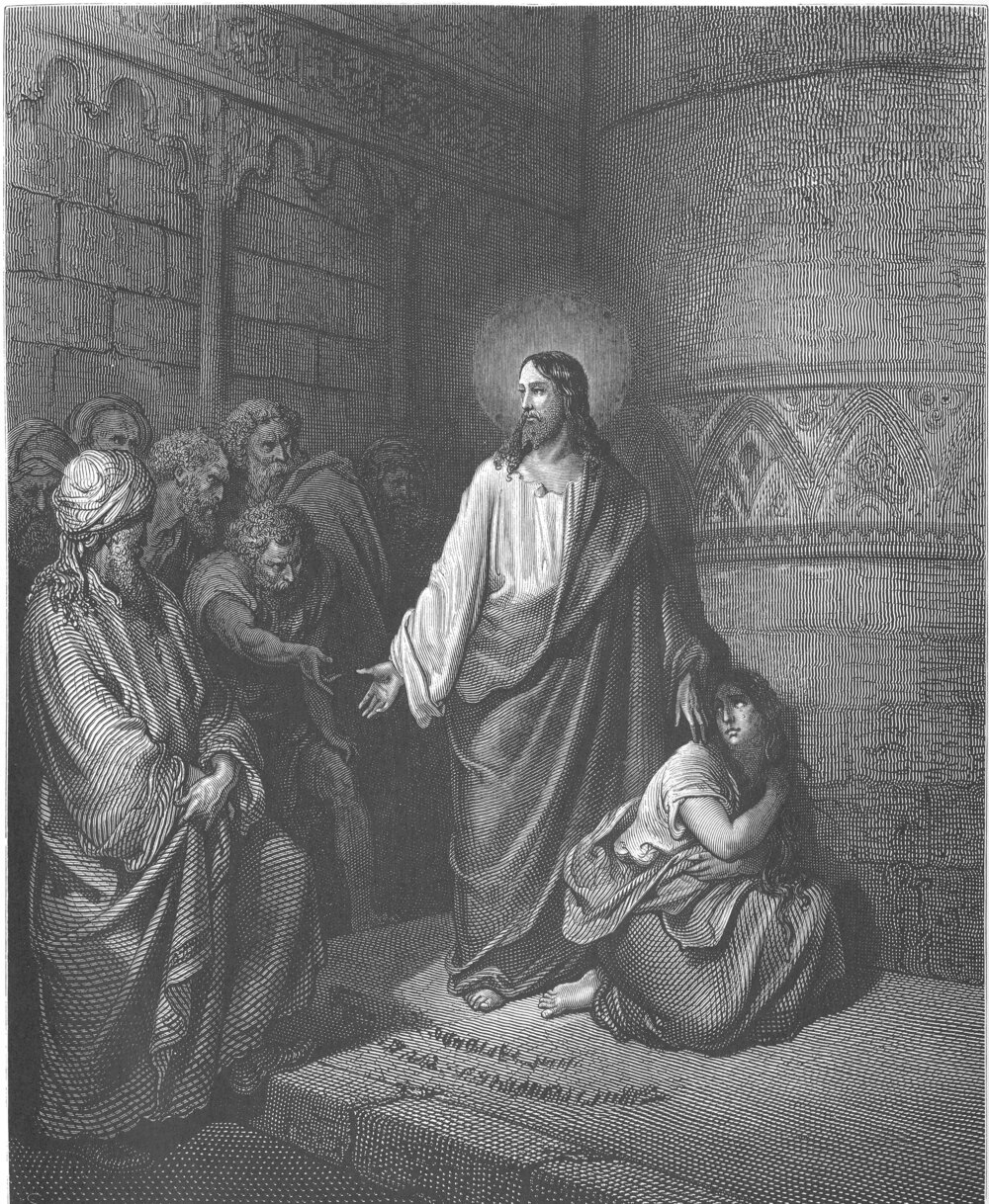
Gustave Doré, Jesus and the Woman Taken in Adultery · public domain
The one everyone else wrote off
This is why no one is beyond reach. God does not grade souls by how hardened the outside has become. He sees the person underneath, and “the things which are impossible with men are possible with God” (Luke 18:27). He found Hagar in the desert. He struck Saul the Christian-killer to the ground on the Damascus road and turned the persecutor into an apostle. He took a dying thief’s last honest breath and answered, “To day shalt thou be with me in paradise” (Luke 23:43). The one you would write off — the one they would write off — is very often exactly the one He is walking into the wilderness to find.
How a soul is really won
So souls are not mainly won by winning arguments. They are won by being seen — by someone who looks past the outward person to the soul inside and asks, gently, where they have come from and where they are going. That is the whole art of it: to see a person the way God sees them, which means seeing past the armor to the frightened, image-bearing soul it is guarding. The best soul-winners are simply people who have learned to look the way El Roi looks.
After I came to God and was settled into the Pentecostal way, I felt God tell me to pray for my father. There was no way I believed that was possible, and I said “No” — I wasn’t going to waste God’s time or mine. He said it again, and I gave the same answer; I even decided to help God understand that it was a waste of time, that it was incredulous of Him to ask me to pray for that man.
Then, at church, a visiting preacher told everyone to think of the person who would be last in a line of people who were lined up to be saved. Immediately I knew who mine was — my father. And the preacher said, “Now believe that person will get saved!” Wow. I looked up at the ceiling and said, “God, do You know something that I don’t?” So God won, and I told Him I would try, even though I couldn’t wrap my mind around it.
So I began to think about my dad more, and God started giving me visions — of his arrival in America from Nazi Germany, and experiences he might have had right after World War II. These visions were accurate: when I asked my dad about them, he verified them to be 100% correct. My understanding of my father grew, and my faith with it — until, forty years later, he was saved by the born-again experience. His journey was long, but God took him to glory at last.
I am so grateful that the same God who saw Hagar saw my dad, and started me on the path to see him saved. Now I have faith for hardcore impossibilities.
— Liz
He sees you
So wherever you have come from, and wherever you think you are going — the God who found a runaway in the desert sees you, too. Not a vague, distant seeing, but the kind that knows your whole road and loves you still. “Thou God seest me” is true for you. And the answer He asks is the same turning He has always asked:
“Repent, and be baptized every one of you in the name of Jesus Christ for the remission of sins, and ye shall receive the gift of the Holy Ghost.” — Acts 2:38
You have been seen the whole time. The only question left is the second one He asked Hagar: whither wilt thou go?